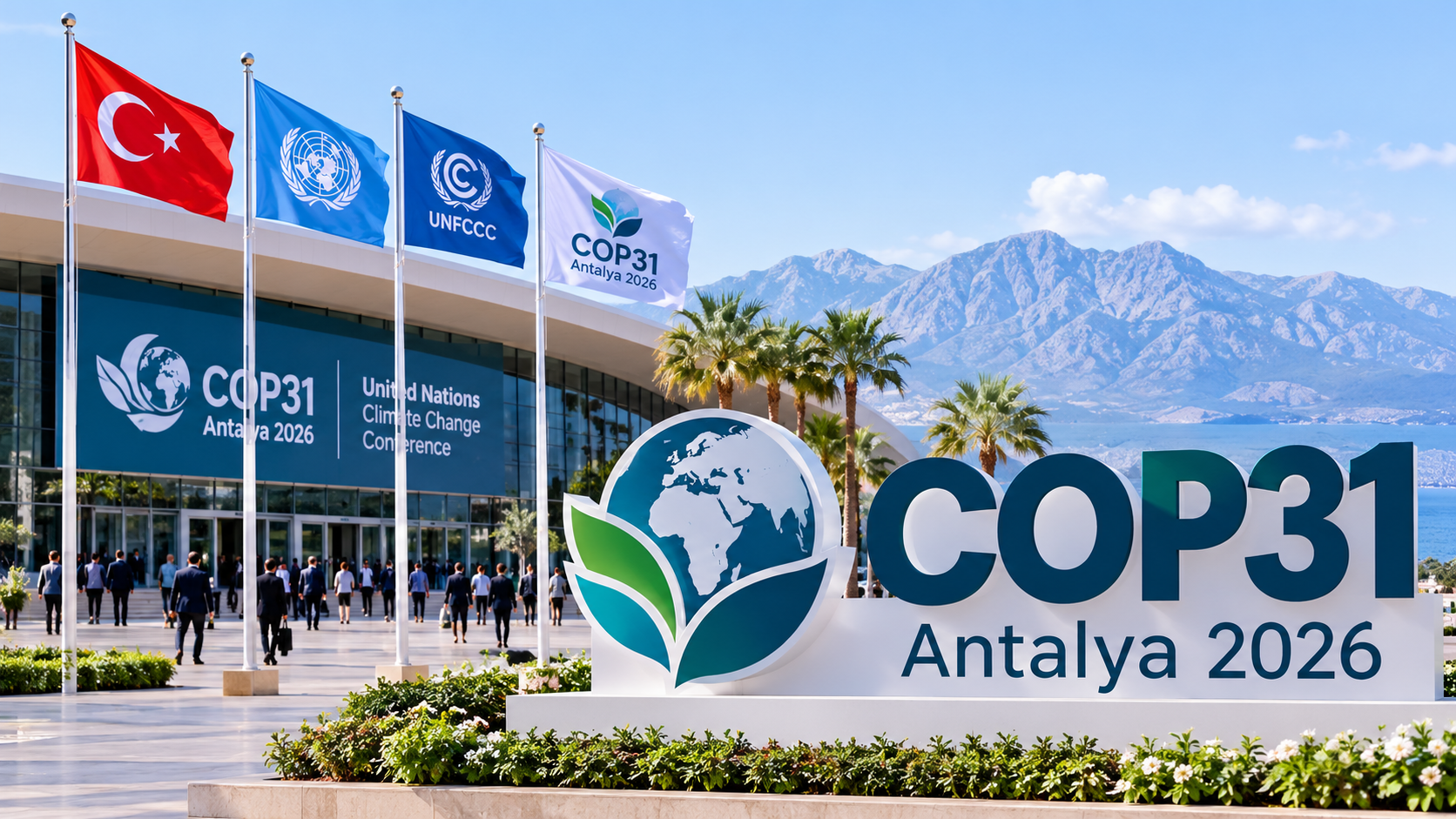
Hosted by Türkiye at the Antalya Expo Center from November 9–20, 2026, the United Nations Climate Change Conference (COP31) represents a historic milestone in translating the Paris Agreement targets into tangible on-the-ground action and charting the future course of global climate policy. Throughout the summit, Parties directly address emissions reduction commitments, climate finance mechanisms, means of implementation, and international cooperation frameworks. Beyond government delegations, this gathering in Antalya provides the business community, civil society organizations, financial institutions, and academia with a vital platform to closely follow the global climate agenda and actively contribute to decision-making processes.
What is COP31 and Why Does It Matter?
Convening Parties to the United Nations Framework Convention on Climate Change (UNFCCC) annually, the Conference of the Parties (COP) stands as the supreme decision-making body in the global fight against climate change. During these sessions, nations review existing climate commitments and negotiate actionable roadmaps for implementation.
What sets COP31 apart from previous summits is a decisive shift from target-setting to real-world execution. In alignment with the Paris Agreement’s core goal of holding the global average temperature increase well below 2°C above pre-industrial levels and pursuing efforts to limit it to 1.5°C, the summit’s primary agenda centers on greenhouse gas (GHG) emissions reduction, climate adaptation, accelerating climate finance flows, and transitioning toward a low-carbon economy.
COP31 Organization and Negotiation Structure
Proceeding under the host leadership and Presidency of Türkiye, COP31 operates across two primary zones that encompass both official diplomatic negotiations and multi-stakeholder engagement:
- Blue Zone: The formal venue where national delegations conduct official negotiations, intergovernmental sessions, and high-level summits coordinated by the United Nations.
- Green Zone: An open engagement hub where private sector representatives, civil society organizations, academia, and local governments showcase climate solutions, field implementations, and collaborative initiatives.
This dual-zone structure reflects the reality that the climate crisis cannot be resolved solely through diplomatic decisions by governments, but requires concerted action across the real economy and all segments of society.
COP31’s 10 Priority Themes
The summit’s action agenda advances around 10 interconnected pillars, spanning from energy transition and industrial decarbonization to food security and urban resilience:
- Clean Energy Transition and Electrification: Reducing fossil fuel reliance, scaling up renewable energy investments, and electrifying energy systems take top priority. Energy efficiency measures and grid infrastructure modernization serve as the cornerstones of this transition.
- Zero Waste and Methane Emissions Reduction: The agenda targets preventing waste generation at the source, scaling circular economy models, and curbing methane emissions. Enhancing resource efficiency across production processes directly contributes to greenhouse gas (GHG) mitigation.
- Climate-Resilient Cities: This theme focuses on fortifying urban infrastructure against extreme weather events, floods, droughts, and heatwaves. Sustainable transit networks, green corridors, and climate-adaptive urban planning stand at the core of this pillar.
- Green Industrialization: Transitioning industrial facilities toward low-carbon manufacturing models, boosting energy and raw material efficiency, and adopting clean production technologies form the focus of this theme. Beyond minimizing environmental footprints, green industrialization is decisive for safeguarding corporate competitiveness in global markets and ensuring compliance with emerging climate regulations.
- Youth and Education: Efforts aim to foster greater participation of younger generations in climate policy and decision-making mechanisms, elevate climate literacy, and strengthen public awareness through educational curricula.
- Food Security: This pillar addresses safeguarding agricultural production and food supply chains against climate-induced risks such as drought and yield loss, alongside promoting sustainable agricultural practices.
- Oceans and Seas: Protecting marine and coastal ecosystems, strengthening the ocean’s function as a carbon sink, and ensuring the sustainable management of marine resources rank among the key priorities.
- Dynamic and Resilient Health Systems: The objective is to enhance the preparedness and response capacities of healthcare infrastructures against the mounting public health pressures of extreme heat, air pollution, and climate-related disasters.
- Synergy Among the Rio Conventions: This theme seeks to foster coordinated action and alignment across the three foundational UN conventions to address interconnected environmental crises—climate change, biodiversity loss, and desertification/land degradation.
- Climate Implementation Bridge (BRIDGE): Supporting the translation of pledges from paper into tangible on-the-ground projects, the BRIDGE approach brings together climate finance, technology transfer, and institutional capacity-building mechanisms.
Key Highlights on the Negotiation Agenda
The ongoing negotiations in Antalya focus on bridging the gap between the climate targets pledged by nations and the tangible mechanisms required to achieve them:
- Nationally Determined Contributions (NDCs): Updating countries’ greenhouse gas (GHG) mitigation and adaptation targets alongside concrete implementation roadmaps for these commitments.
- Climate Finance: Clarifying and operationalizing financial mechanisms required by developing nations for clean energy transitions and climate adaptation projects.
- Emissions Mitigation: Enacting binding policies to curb emissions across hard-to-abate and high-emitting sectors such as energy, heavy industry, transportation, and agriculture.
- Climate Change Adaptation: Mapping physical climate risks and strengthening the resilience of vulnerable regions.
- Technology Transfer and Capacity Building: Facilitating access to low-carbon technologies, technical know-how, and specialized expertise.
- Implementation and Monitoring (MRV): Tracking pledged commitments through transparent, measurable, and verifiable reporting frameworks.
Because decisions at COP summits are adopted by consensus among the Parties, ongoing negotiations involve intensive diplomacy aimed at balancing countries’ levels of economic development with their historical responsibilities.
What Does COP31 Mean for the Business Community and Industrial Enterprises?
The topics under discussion at COP31 clearly demonstrate that climate policies no longer concern public institutions alone, but directly impact corporate balance sheets, manufacturing operations, and supply chains. In particular, decisions regarding green industrialization, the clean energy transition, and climate finance are establishing new standards and commercial expectations for industrial organizations.
Companies preparing for this transition should prioritize the following areas:
- Corporate Carbon Footprint: Accounting for Scope 1, Scope 2, and Scope 3 greenhouse gas (GHG) emissions in accordance with international standards and pinpointing actionable decarbonization levers.
- Energy Transition: Conducting on-site energy efficiency audits, planning renewable energy investments, and reducing energy-related emissions.
- Water Footprint and Resource Efficiency: Quantifying the environmental impacts of water withdrawal and consumption, wastewater management, and raw material utilization across manufacturing processes.
- Climate Risk Analysis: Assessing the financial impacts of physical risks—such as extreme weather events—alongside transition risks, including carbon border adjustment mechanisms (CBAM) and emerging carbon taxes.
- Sustainability Reporting: Transparently disclosing Environmental, Social, and Governance (ESG) performance in alignment with national and international reporting frameworks (such as TSRS and GRI).
- Low-Carbon Manufacturing: Reducing product-level carbon intensity through Life Cycle Assessments (LCA) and supply chain optimization.
For businesses, taking these steps goes beyond mere regulatory compliance; it unlocks access to concessional green finance, secures integration into global supply chains, and establishes a distinct competitive advantage across export markets.
Official Sources & Reference Links
- COP31 Türkiye Official Website: COP31 Antalya 2026 Host Country Portal
- United Nations Framework Convention on Climate Change (UNFCCC): UNFCCC COP31 Antalya Conference and Agenda Page
The key decisions emerging from the negotiations in Antalya and evolving global trade rules demonstrate that emissions and resource management now directly impact corporate balance sheets.
At Sustranet Sustainability Consultancy, we compile corporate carbon and water footprint inventories in accordance with international standards, assess climate risks, and structure end-to-end sustainability reporting frameworks. Contact us to accurately quantify your facility’s environmental baseline and establish an actionable decarbonization roadmap.
Leave a Reply