The European Commission has published its Climate Action Progress Report 2026, assessing the European Union’s annual progress towards its climate targets. Presented under the subtitle “From ambition to delivery: building a clean, competitive and independent Europe”, the report outlines the EU’s 2025 emissions performance, clean energy transition, and new legislative regulations entering into force as of 2026.
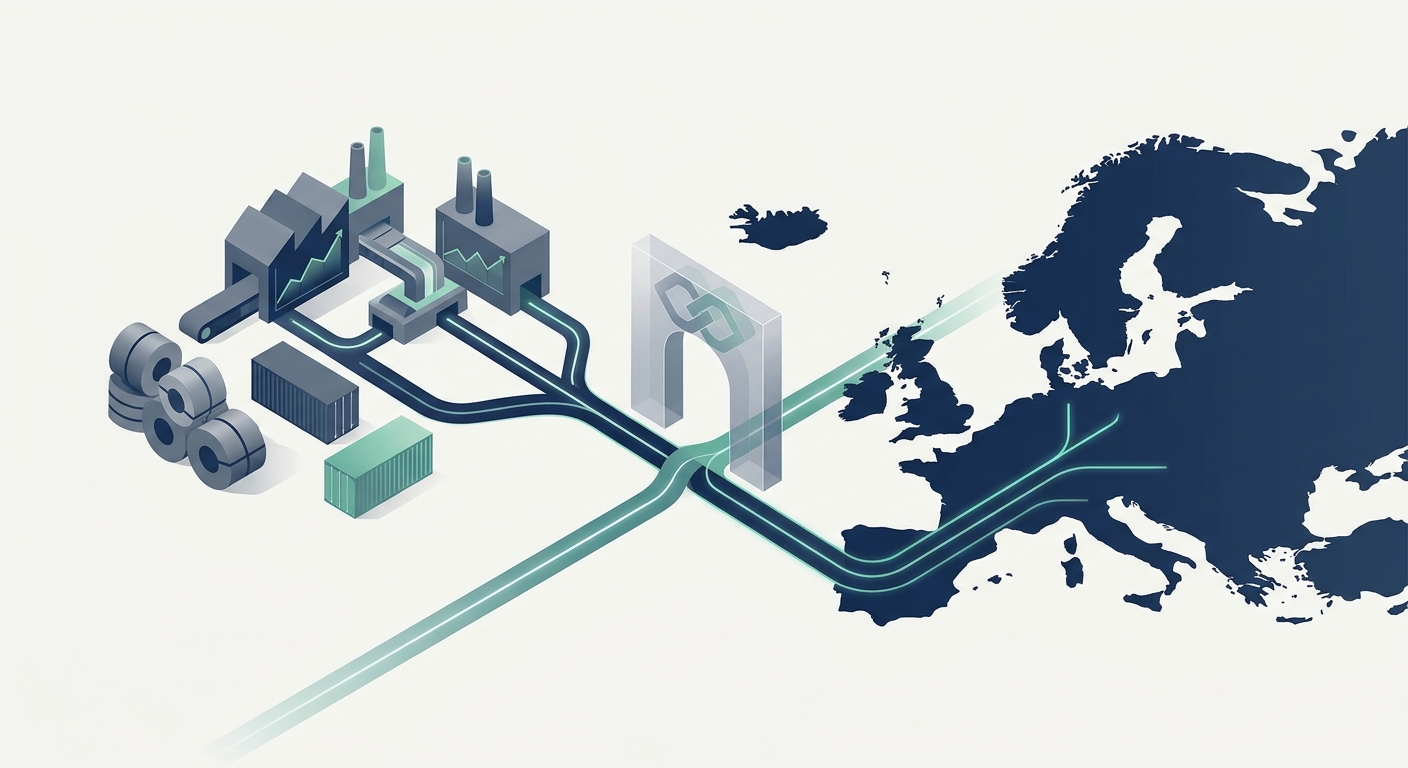
The outlook presented in the report directly impacts not only energy and industrial policies within EU Member States, but also the carbon management strategies of all exporting enterprises operating within the European supply chain, primarily those in Türkiye.
EU Emissions Data and the Binding 90% Target for 2040
According to the official inventory data shared in the report, the EU’s total net greenhouse gas (GHG) emissions decreased by 1.6% in 2025 compared to the previous year, falling 39% below 1990 levels. Verified emissions from power and industrial installations covered by the EU Emissions Trading System (EU ETS) recorded a 2.0% reduction over the same period.
The most critical regulatory development was the amendment to the European Climate Law, which entered into force in April 2026. With this regulation, the EU made the target of reducing net greenhouse gas emissions by 90% by 2040 compared to 1990 levels legally binding.
Clean Energy Capacity and Industrial Decarbonisation Finance
Under geopolitical developments and energy security pressures, the EU continues to accelerate clean energy investments. Key figures highlighted in the report include:
- Renewable Energy Savings: Total installed wind and solar power capacity in the EU reached 611 GW in 2025. Thanks to the 260 GW of additional capacity commissioned since 2021, approximately 14 billion cubic metres of natural gas imports were avoided in 2025, generating cost savings of over €5 billion.
- EU ETS Revenues and the Industrial Decarbonisation Bank: EU ETS auctions generated €43.2 billion in revenues in 2025. Under the ETS revision proposal presented by the Commission in July 2026, the establishment of a new Industrial Decarbonisation Bank aiming to mobilise €100 billion to support clean technology investments in industry is envisaged, alongside making post-2030 free allowances conditional upon concrete decarbonisation investments.
- Expanding Scope in the Transport Sector: As of 2026, methane (CH₄) and nitrous oxide (N₂O) emissions have been included alongside carbon dioxide within the scope of the EU ETS for maritime transport. In the aviation sector, free emission allowances have been completely phased out, transitioning to full auctioning.
Carbon Border Adjustment Mechanism (CBAM) and Impacts on Turkish Exporters
With its definitive regime commencing on 1 January 2026, the Carbon Border Adjustment Mechanism (CBAM) has now become a direct financial cost item for industrial enterprises exporting to the EU.
Another significant step highlighted in the report is the preparation to expand the scope of CBAM to prevent the risk of carbon leakage. The regulation on the European Commission’s agenda includes bringing specific downstream processed and finished products derived from iron, steel, and aluminium (such as industrial machinery, automotive supply industry components, and selected white goods categories) within the scope of the mechanism.
This development mandates that not only primary metal or cement producers, but also sub-tier suppliers and machinery manufacturers within the downstream supply chain, record and account for product-level embedded emissions calculations.
Official Source
European Commission (November 2026): Climate Action Progress Report 2026 – From ambition to delivery: building a clean, competitive and independent Europe (Directorate-General for Climate Action).
The EU’s 2040 emissions targets and CBAM scope expansion measures demonstrate that verifiable carbon data has now become a commercial prerequisite for companies supplying products to the European market.
As Sustranet Sustainability Consultancy, we prepare corporate greenhouse gas inventories (ISO 14064-1) and product carbon footprint calculations (ISO 14067) in compliance with international standards, providing technical support across CBAM reporting and emissions reduction processes. You may contact us to analyse your facility’s current emissions data and establish a roadmap to safeguard your competitiveness in the EU market.
Leave a Reply